How Smart Technology Is Making Home Water Softer — and Smarter
Hard water is one of those home problems most people live with for years before they name it. White crust on taps, spots on dishes, soap that never quite lathers, skin that feels dry after a shower, and appliances that wear out sooner than they should. The cause is simple: too much calcium and magnesium in the water supply.
Water softeners have solved this problem for decades. What is new is the technology around them. Smart sensors, phone apps, and automatic controls are changing how these systems work in a normal home — and how much attention they need from the people who own them.
The old way vs. the smart way
A traditional water softener works on a timer. It regenerates — flushes itself clean with salt water — on a fixed schedule, whether the household used a lot of water that week or almost none. That wastes salt and water, and it means the system needs regular manual checks: salt levels, settings, and the occasional guess about whether it is working at all.
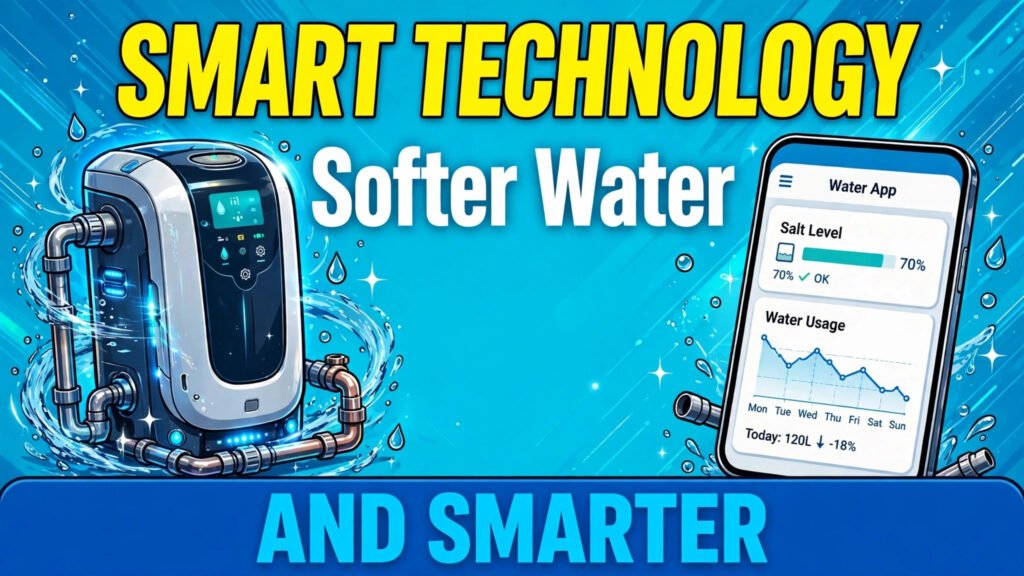
A smart softener works from actual use. It measures how much water the home uses and regenerates only when needed. Most models connect to a phone app, so the owner can see water use, get a warning when the salt runs low, and change settings without walking to the basement or utility room. Nothing about the chemistry has changed — the water is softened the same way. The control around it has.
What smart features actually help
Not every smart feature is worth paying for. The ones that make a real difference are practical:
Salt and system alerts. Running out of salt is the most common reason a softener stops working. An app alert before that happens saves a week of hard water.
Water-use tracking. Seeing daily and monthly use helps a household spot unusual patterns — a sudden jump can point to a leak or a running toilet long before the water bill does.
Automatic regeneration. Systems that regenerate based on use instead of a fixed clock use less salt and less water over a year.
Remote control. For a second home or a rental property, checking and adjusting the system from a phone is genuinely useful. For a single-family home, it is a convenience, not a necessity.
Sensors beyond the softener
The same trend is showing up around the rest of the home’s water. Small sensors now sit near water heaters, washing machines, and under sinks, and send a phone alert at the first sign of a leak. Some whole-home monitors watch water pressure and flow, and can shut the water off automatically if a pipe bursts while nobody is home.
Water-quality monitors are becoming more common too. They track things like total dissolved solids and chlorine, and give a household a rough picture of what is coming out of the tap. They do not replace proper lab testing, but they help people notice changes early.
Do you actually need a softener?
Technology is only useful if the problem is real. Before buying any system — smart or not — the first step is to test the water. A simple home test shows whether the water is hard and how hard it is, and that answer decides everything else: whether a softener is needed at all, and what size makes sense. You can learn how to test your water hardness at home (https://softwaterhq.com/how-to-test-water-hardness/) with a basic test kit or strips, and the whole check takes a few minutes.
If the test shows soft or moderately hard water, a softener may not be worth the money, smart features or not. If the water is very hard, the right system pays for itself in longer-lasting appliances, less soap and cleaning products, and fewer limescale repairs.
What to look for
For anyone shopping for a smart softener, a few points matter more than the brand name on the box:
– Size it to the home. Capacity depends on water hardness and daily use, not on the size of the house alone. An oversized system wastes salt; an undersized one regenerates too often.
– Check the app before buying. A good app shows salt level, water use, and regeneration history clearly. A confusing app turns a smart system into a regular one.
– Look at running costs. Salt, water used in regeneration, and electricity add up. A system that regenerates only when needed usually costs less to run.
– Plan for maintenance. Even smart systems need salt refills and the occasional check. The app reminds you — it does not do the work for you.
The bottom line
Smart technology has not changed what a water softener does. It has changed how much work it asks of its owner. Alerts replace guesswork, usage data replaces fixed timers, and a phone check replaces a trip to the utility room. For homes with genuinely hard water, that is a real improvement — not because the water is softer, but because the system is easier to live with.
For plain-language guides on hard water, testing, and choosing a system, visit SoftWaterHQ.